



It’s been a quiet week in the US market as far as smartphones go, but Apple unveiled the M5 chipset and launched three new products alongside it. But let’s start with the phones and without any new launches, we turn to the usual suspects.
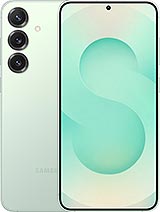
The Samsung Galaxy S26 Edge has reportedly been cancelled, to be replaced with the Galaxy S26+. So, the Galaxy S25 Edge could remain Samsung’s thinnest phone for a while. It’s not quite as capable as its S25+ sibling, but at least it’s a lot cheaper.
Here’s the Samsung Galaxy S25+ for reference. For an in-depth look, you can check out our head-to-head article on how the S25+ and S25 Edge compare.
The Nothing Phone (3) is another experiment with questionable results – nothing trying to break into the flagship market. It certainly has its strengths, but it’s not up to the task of competing with top models from other makers. It’s cheaper than those phones, though, so things like LTPS displays and average battery life don’t hurt as much. And it still has a versatile triple 50MP camera, a mostly clean UI, good speakers and a very bright 6.67” 120Hz OLED display.
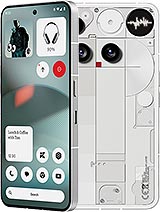
You can get it with the Nothing Headphones (1), which have a single white and transparent look (although black and transparent are also an option). They are quite heavy, but offer excellent sound quality and active noise cancellation. The build quality is also very good.

Alternatively, the CMF Headphone Pro is much more “normal” looking and much cheaper – even with the discount on the headphones (1), they’re less than half the price. We’re working on a review of the CMF headphones, but first impressions are great.

The Motorola RAZR 2025 has been at $600 for a while now and this week is no different. This discount is not so good anymore.

The Motorola RAZR+ 2025 uses some older hardware (it’s a re-release of the RAZR Ultra 2024 but with a better IP rating), but it’s now heavily discounted to the same $600 price as the vanilla RAZR 2025. Plus a 50MP 2x telephoto camera (vs. 13MP 120° ultra-wide). The battery is smaller (4,000mah vs 4,500mah) but has a slight edge in charging (45W wired vs 30W, wireless charging is 15W on both phones).

There’s always the new Ultra, which settles at the $1,000 mark. The Motorola Razr Ultra 2025 beats its predecessor (and thus the Plus) with a Snapdragon 8 Elite and a larger 50MP sensor (1/1.56″ vs. 1/1.95″) in the main camera. It also has a big, fast battery – 4,700mah with 68W wired and 30W wireless charging.

Of course, the Ultra competes with the Samsung Galaxy Z Flip 7, which has a slight price advantage. Note that this year the US model uses the same Equinox 2500 as the rest of the world. The 50MP main camera has a similarly sized 1/1.57″ sensor and includes a 12MP ultra-wide module. The 4,300mAh battery is slow to charge at 25W on a wire and wirelessly at 15W.
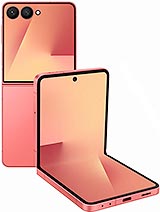
You can save some money by going with the Samsung Galaxy Z Flip 7P. It’s another re-release of the 2024 model, though Samsung has changed the chipset—the ZZ Flip 6’s Snapdragon 8 Gen 3 is replaced by an Exynos 2400. You can read more about how the Z Flip 7 Fe compares to the Z Flip 7 to see what you’re giving up to save $124 by picking the FE model.
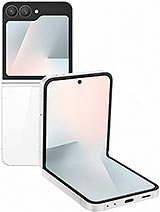
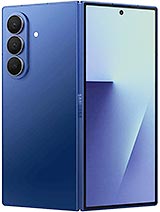
The Samsung Galaxy Z Fold 7 is a solid $400 off, putting it under $200 from its rival, the newly launched Google Pixel 10 Pro Fold. We haven’t reviewed the Pixel yet, but we’ve reviewed the rest of the Pixel 10 series and we can already tell you that the Tensor G5 is no match for the Snapdragon 8 Elite (yes, the Z Fold 7 uses a Qualcomm chip, unlike the Z Flip 7). The Pixel Foldable is also thicker (10.8mm vs 8.9mm) and heavier (258g vs 215g), though it has a bigger battery (5,015mah vs 4,400mah).

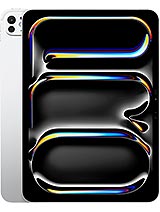
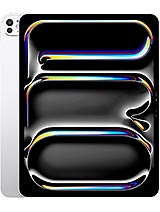
As we mentioned in the opening paragraph, Apple introduced the M5 chipset and upgraded the iPad Pro 11″ and 13″ models with it. They also use other Apple chips—the N1 and C1X—so they have Wi-Fi 7 connections. Additionally, the USB-C port now features adaptive sync (variable refresh rate) up to 120Hz when switched to a compatible display (check your TV, many OLEDs support this).
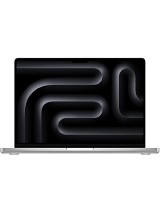
Apple also improved the MacBook Pro with a new 14″ model. However, it uses Broadcom chips for wireless connectivity, so it only has Wi-Fi 6e. New chipset aside, the new Apple MacBook Pro 14″ is largely the same as its M4 predecessor.
We may receive commissions from qualifying sales.
