



The open wearable stereo (OWS) market gained serious traction in the last couple of years, and now every brand has its own entry. While traditional earbuds come with the tried and tested plug form factor, which sits inside your ear, OWS models place their drivers at the tip of your ear canal. This results in heightened awareness of your surroundings at the expense of all-around passive isolation.
The OpenWare Stereo Pro is Xiaomi’s latest offering, and it aims to outdo its competitors by offering a more premium build while retaining its open-fit system. Xiaomi is promising impressive claims of low noise leakage and exceptional battery life rated at 8.5 hours with the buds and 45 hours with the charging case.
So, are the OpenWare Stereo Pro worth their €150/£140 asking price or are you better off with a traditional pair of in-ear buds? These are our findings.
Table of Contents:
Design
While Xiaomi could have used a less sinister name for the OpenWare Stereo Pro, we have to admit that the fit and finish on the buds and case looks great. The buds have a shiny metal finish surrounding the drivers, which connect to the bulb on the back via TPU. Glossy plastic looks great, but it attracts fingerprints easily.

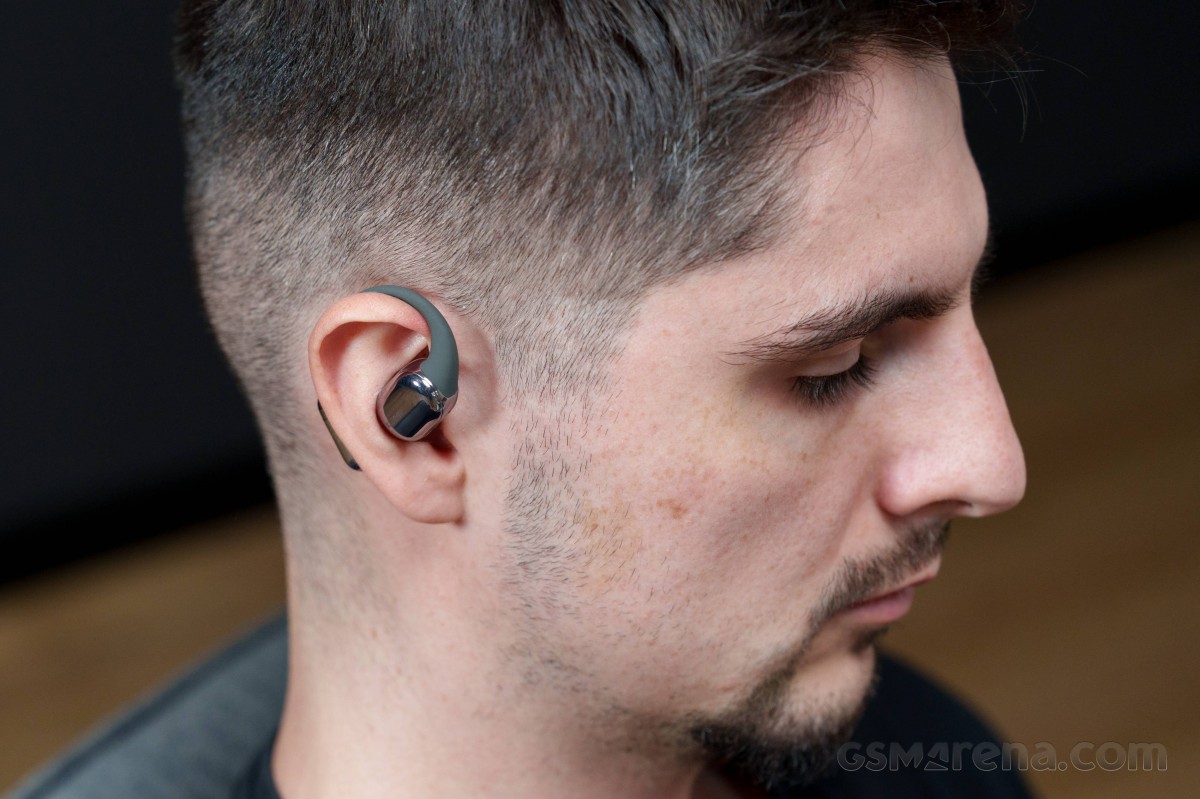
The sweeping design hooks into the top half of your ear and positions the driver over your ear canal without actually making contact. This makes for a comfortable fit, and Xiaomi’s three-point support design distributes pressure evenly along the length of the buds.
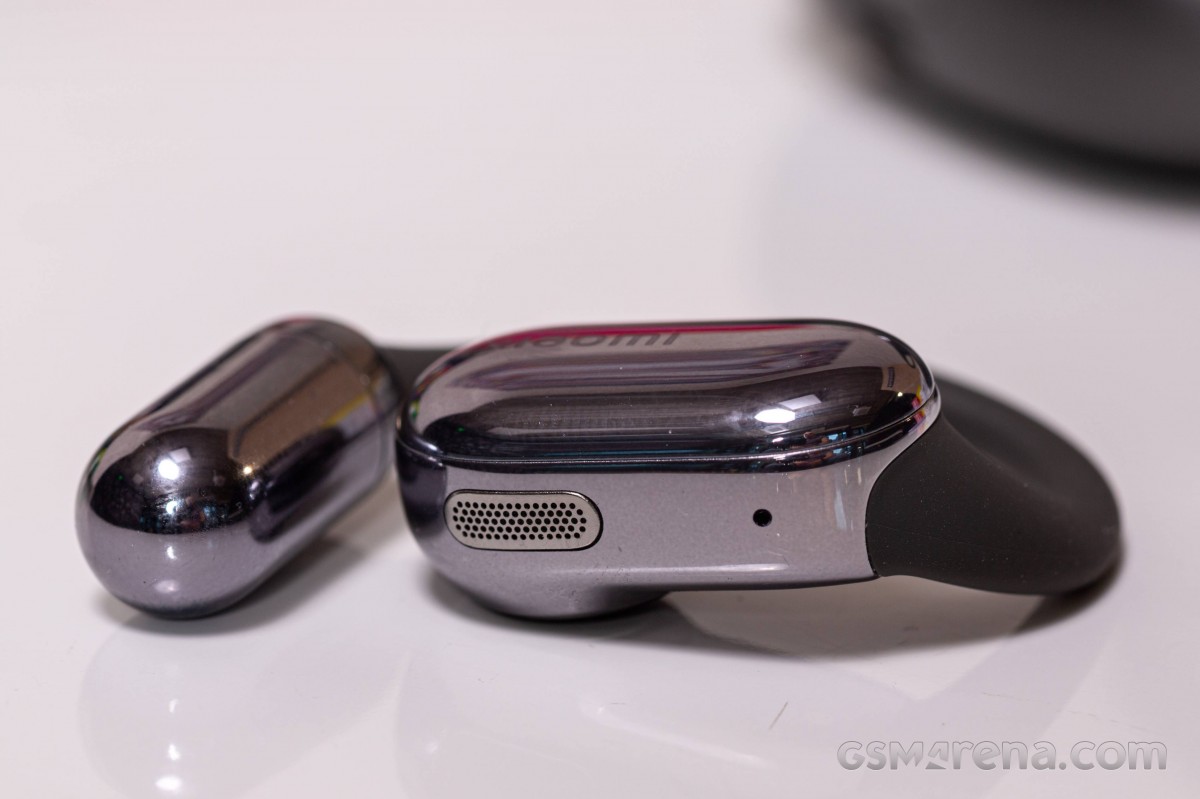
Each earbud weighs 9.8 grams, while the case weighs 53 grams, bringing the combined total to just 73 grams. We never felt uncomfortable using the OpenWare Stereo Pro, and their ergonomic design is up there with the best in the OWS market.

The ear hook design also ensures that the buds stay in place at all times, even during runs and workouts, where normal in-ear TWS buds can easily lose their grip.
The case feels like a scaping stone in that it is smoothed and sculpted to perfection with a soft and pleasant inside feel. It’s certainly not compact, but it’s up there with most OWES earbuds we’ve tested.
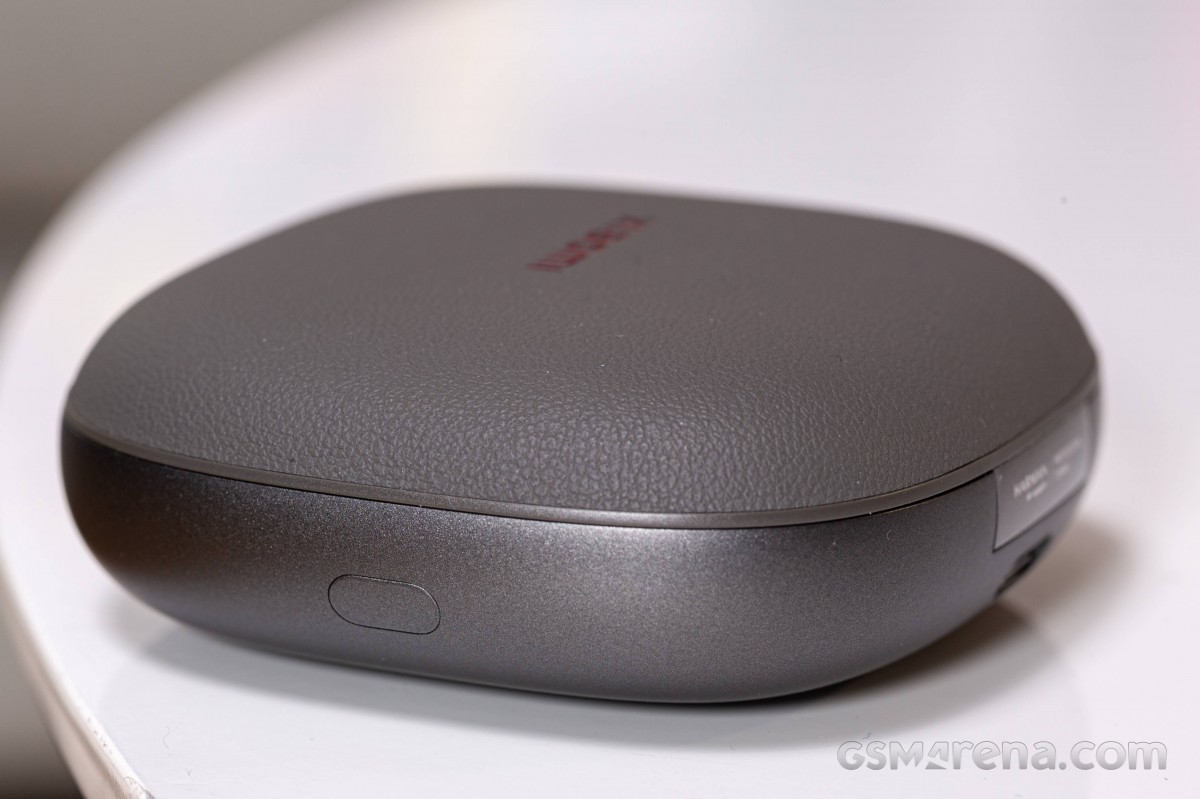
Our review unit comes in Graphite Black and has a faux leather finish on the case lid and a matte finish on the bottom half. Despite its plastic construction, the case is well built and doesn’t make any loud noises. The lid closes with a firm snap, and the hinge has a satisfying feel to the finish.
Inside the case is a similar suede inner lining. This is our first time seeing this selection of materials inside an AirPods case, and it’s nice to see that Xiaomi put so much effort into something that’s only visible when you open the case. The soft material should also prevent any unwanted scratches on the shiny driver housing of the buds.

The OpenWare Stereo Pro offers IP54 dust and water resistance, while the case lacks ingress protection. The unboxing experience is pretty standard, you get the buds, USB charging cable and user manual inside the case.
Features
Xiaomi didn’t skimp on the features department with the OpenWare Stereo Pro. The buds connect via Bluetooth 5.4 with dual device pairing support so you can use them on two devices simultaneously. You also get 360° head tracking with surround sound, although this feature is better suited for watching movies than listening to music.
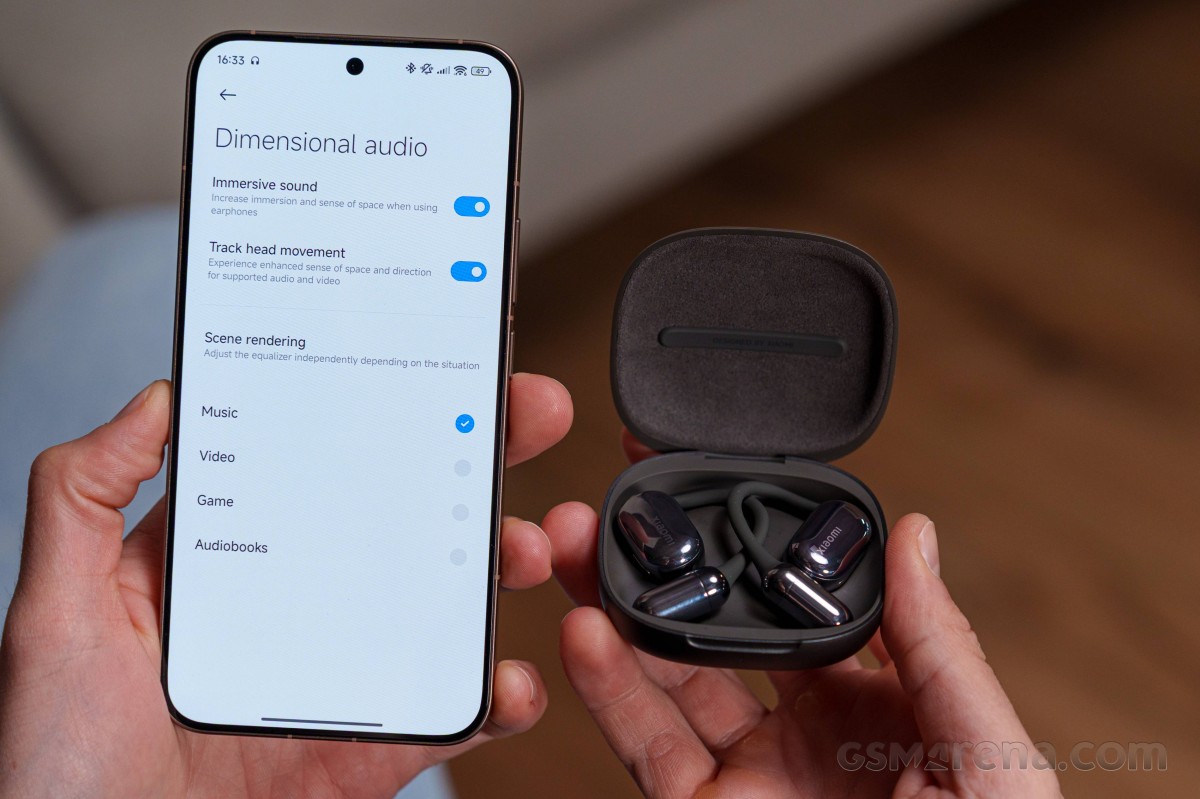
Sadly, like all OWS buds, they lack active noise cancellation (ANC), which goes against their primary purpose of allowing you to be aware of your surroundings. This is especially useful for runners and cyclists in urban areas in terms of safety, and the on-air design is more comfortable for long listening sessions.
Although there is no ANC, Xiaomi claims it has improved sound leakage, which has been a pain point for all OWS buds. OpenWare Stereo Pro features a dedicated acoustic leakage reduction driver that emits reverse-phase sound waves.
On paper, Xiaomi claims you shouldn’t be able to hear any good leaks within 25cm of the buds, but in reality, people in your immediate vicinity will likely hear sounds coming from these earbuds despite Xiaomi’s optimizations.
You control the buds via touch controls that are integrated into the exterior of the drivers. We had no issues with touch registers, and you’re free to customize single, double, triple taps, as well as press and hold gestures.
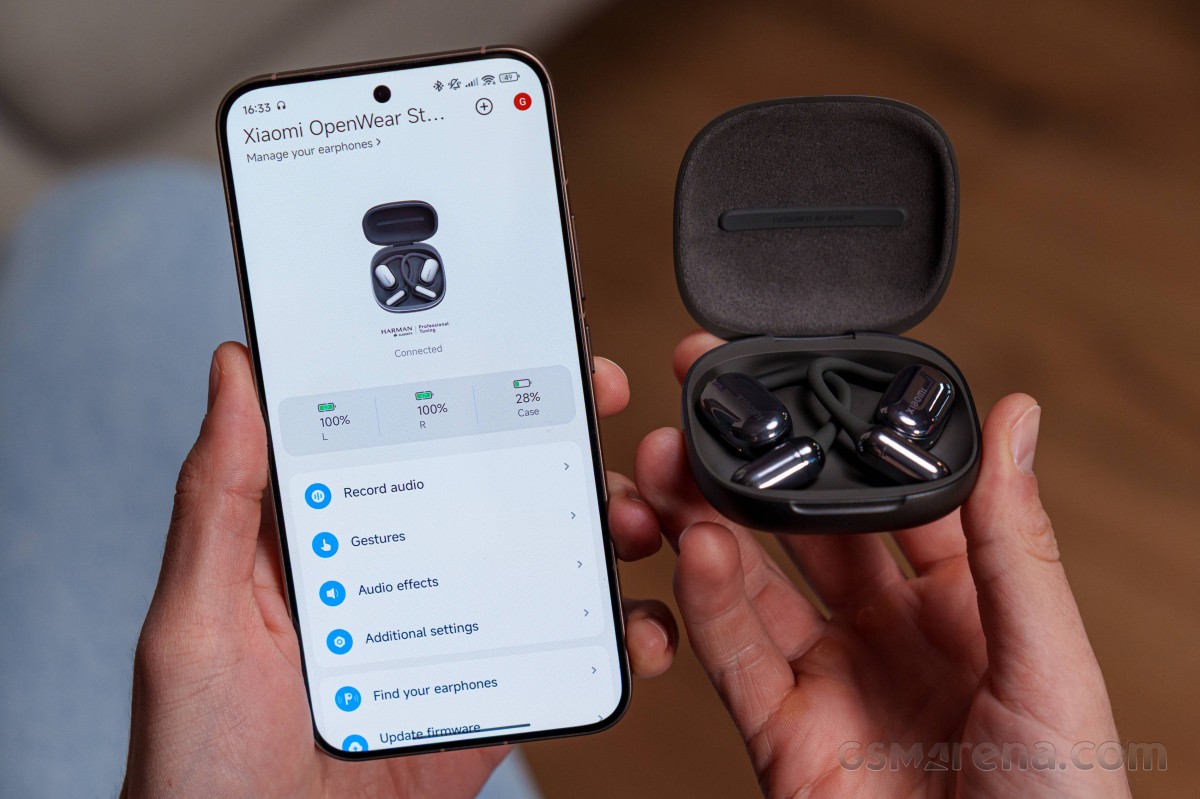
Adaptive volume is another nice feature that adjusts the volume level based on your ambient noise level. In our experience, it had a hard time managing the volume in noisy environments where it was most needed, so we can’t vouch for its effectiveness.
Xiaomi also added the ability to record audio directly from the buds. You get up to 120 minutes per earbud for a total of 240 minutes of total recording. The recording quality isn’t that great, but this feature is useful enough for writing audio notes when you’re in a hurry.
In our time testing the buds with Android, iOS and macOS devices, connectivity was excellent with no drops or anomalies.
Sound quality
OpenWare Stereo Pro features custom 18 x 13mm dynamic drivers with piezoelectric ceramic tweeters and dual balanced armatures. They support AAC, SBC and LDAC codecs and feature Harman Audio Tuning. We’re not always impressed with the audio from the OWS buds because of their disproportionate level and clarity of sound and bass.
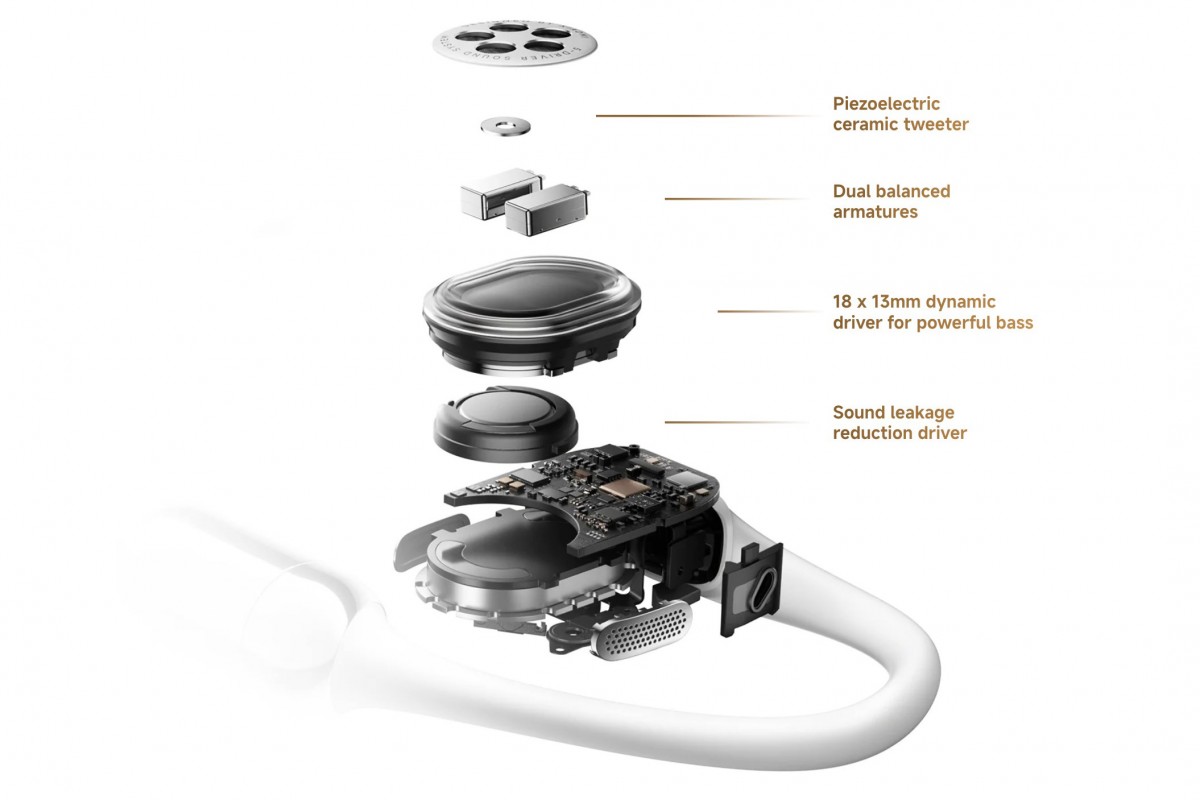
But OpenWare Stereo Pro offers a surprisingly lively soundstage with plenty of bass for earbuds that don’t touch your ear canal. You get to experience detailed mids and highs while also benefiting from the comfortable wraparound design of the buds.
Changing the volume doesn’t distort the sounds at high ranges, which isn’t always a given with OWS buds. Speaking of volume, if you’re using these buds in a noisy environment you’ll need to increase the slider, as the sound gets lost.
We’ve found that OpenWare Stereo Pro delivers a more detailed sound output than something like Kuch Nahin Kan (Open), with deep bass and a lively soundstage.
Although you don’t get actual control over the equalization, Xiaomi provides four pre-installed options, including Harman Master and Harman Audiofix, as well as treble and volume boost modes. In our experience, the Harman Master preset brings out a wider sound and more detail in instruments.
While the quality of the microphone on the buds is far from class-leading, it gets the job done indoors, with people at the other end reporting clear reception of my voice. When jumping into a noisy street with car traffic, microphones have a tough time picking up sound.
Battery life
Xiaomi claims you can expect up to 8.5 hours of playback from the buds which extends to 45 hours when combined with the charging case. Each earbud has a 56 mAh battery while the case has a large 700 mAh charging case.
During our testing period, we consistently got more than 8 hours of playback from the buds, good for 5 full recharges in this case. This kind of battery endurance is very good and more than enough for several days of heavy usage.
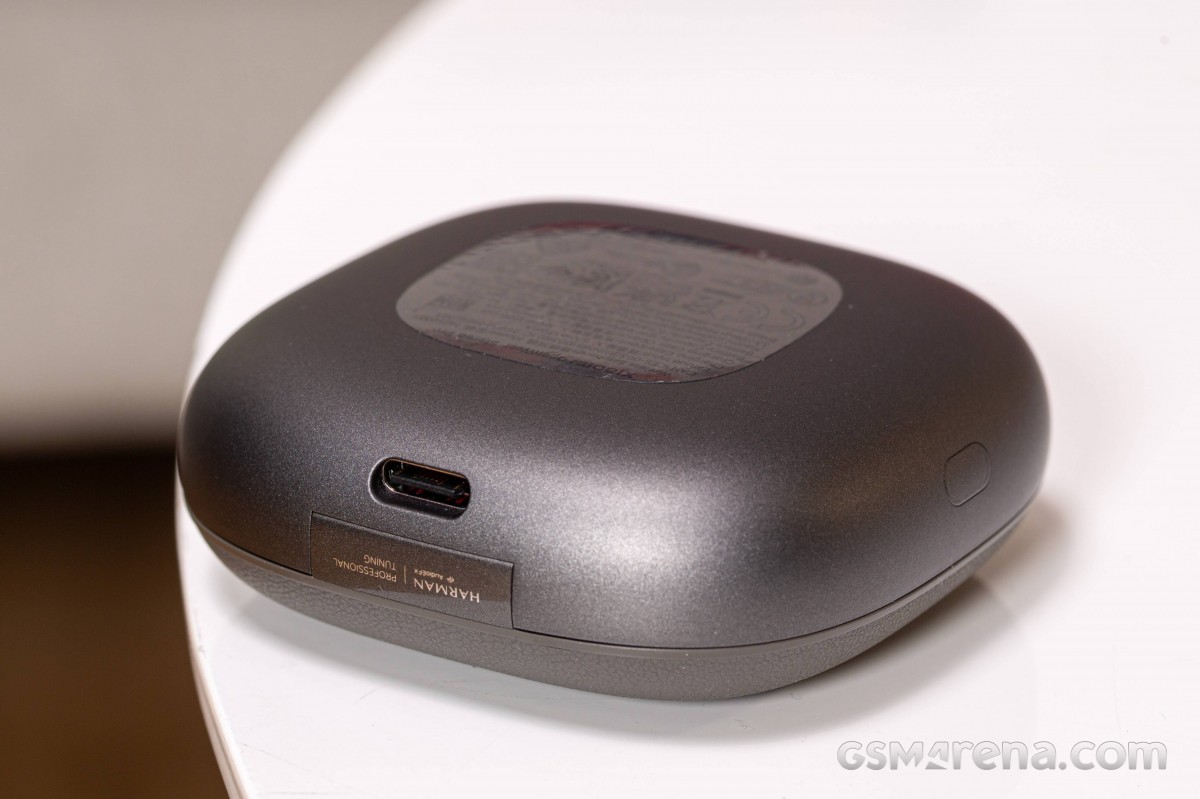
The case charges via USB-C. A full charge from 0 to 100% takes just over 2 hours, while a 10-minute quick-up will set you up for 2 hours of listening.
Verdict
Xiaomi’s OpenWare Stereo Pro OWES are a great pair of earbuds that pair detailed sound output with spatial awareness and excellent battery life. They have a premium design and just about every feature set you could want from a pair of open earbuds.

The fact that they hang over your ears means there’s no ear fatigue even after hours of use, and the evenly distributed weight only adds to the great experience. Sound output is surprisingly rich for an OWS product, although you’ll need to turn up the volume in noisy environments. Despite Xiaomi’s efforts to hide the sound leak, it’s still there in everyday use, but that’s just the nature of this form factor of earbuds.

At €150/£140, the OpenWare Stereo Pro offers a great balance of features, style, comfort and battery endurance. You can certainly get better deals with the Air TWS earbuds, which will offer ANC, but they’re not direct competitors. As it stands, these are some of the best OWES earbuds we’ve tested yet.
Xiaomi is also offering the OpenWare Stereo Pro bundled with the Xiaomi 15T Pro in some markets, making it a great gift to go with your new phone.
We may receive commissions from qualifying sales.
