



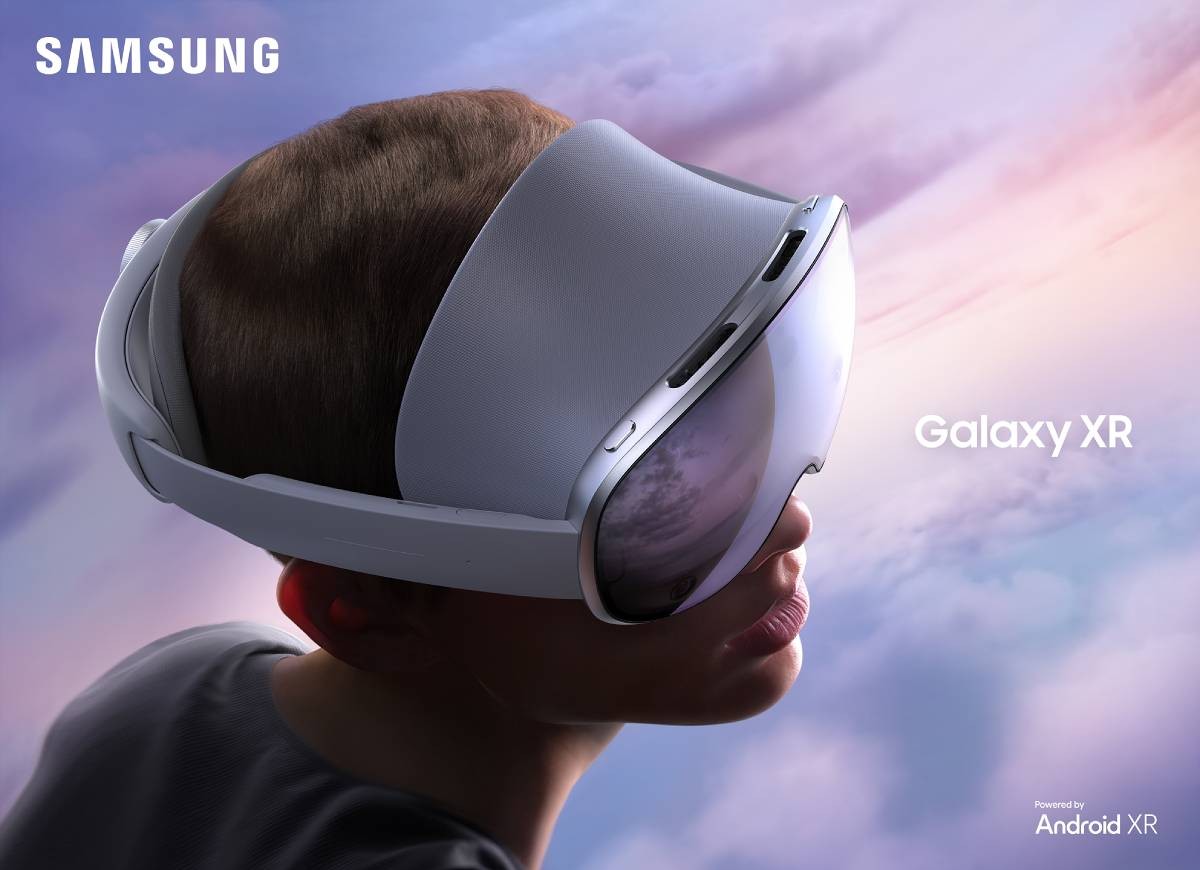
Samsung has joined forces with Google and Qualcomm to launch the Galaxy XR headset – the first of many Android XR devices to come. The three tech companies are promising devices covering the “full spectrum of XR form factors,” including AI glasses. Samsung is working on those, but today its focus is on the headset.
The Samsung Galaxy XR has micro-sized displays with a resolution of 3,552 x 3,840px for a total of 27 megapixels (which is close to 8K resolution). Supported refresh rates are 72Hz default, 60Hz option and 90Hz option. The virtual display covers 109° horizontally and 100° vertically.
There are two cameras on board that can be used for video pass-through (allowing you to see the outside world for an XR experience). The camera can also capture 3D photos and videos. They have an 18mm f/2.0 wide-angle lens and a 6.5MP sensor.
Additionally, there are six world-facing cameras for what’s known as inside-out tracking—position tracking without the need for external hardware, just you and your headset. These cameras also track your hands, which is the primary input method. There is a depth sensor, five IMUs (accelerometer + gyroscope) and a flicker sensor for better experience under artificial lighting.
There are also four eye-tracking cameras inside, so the headset knows what you’re looking at. It also supports iris recognition, which is used to unlock the headset and authenticate you in apps that require it.
The headset has an adjustable interpupillary distance (54-70 mm) and supports optical insertion for users who require glasses. There’s also a removable light shield – it blocks light for better immersion when using VR apps and can be removed for better comfort.
The Galaxy XR weighs 545 grams with the forehead cushion and a separate battery weighing 302 grams. Weight does not include light shield or optional cushion size adjusters.
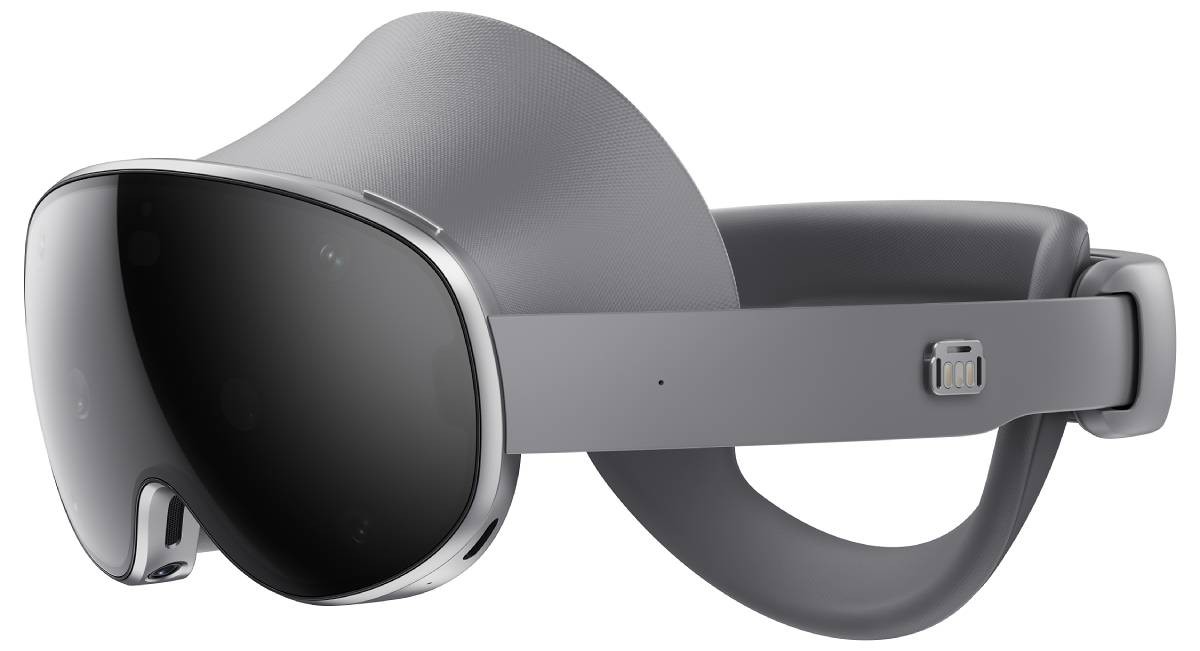
Samsung says the headset’s frame is designed to distribute pressure across the user’s forehead and back of the head to make it more comfortable to wear. Keeping the battery separate from the main unit also puts less weight on your head and neck.
Note that it’s not “out and about the headset” – Samsung says the battery life is up to 2.5 hours, but that’s when watching 2D YouTube videos. In normal use, it is expected to last for 2 hours.
Samsung Galaxy XR is powered by Snapdragon XR 2+ Gen 2. It has a 20% faster CPU and 15% faster GPU than the regular XR2 Gen 2 and supports 12ms full-color video passthrough. The chipset is paired with 16GB of RAM and 256GB of storage.
OK, but what can you do with it? Android XR is an open platform that supports all Android apps out of the box. Developers can use OpenXR, WebXR, and Unity to create new experiences for this and future XR devices.
Another focal point of Google’s Gemini AI platform — when wearing it, the Galaxy XR sees your eyes and hears what you hear, so you can have natural conversations with it about your surroundings and what you’re doing.
You can plan trips with Google Maps, find cool places to see using Gemini. You can find YouTube videos with Gemini and ask questions about what you’re watching. With video passthrough mode enabled, you can use your finger to draw a circle around an object and it will instantly end the search.
The Galaxy XR can of course be used for entertainment as well. You can stream your favorite shows or watch multiple sports broadcasts at the same time in a theater-like experience. You can also play XR-specialized games and have Gemini give you hints at the same time. Adobe has created Project Pulsar, an XR video editor. With all the AI on board, you can even convert regular 2D photos and videos to 3D.
Some other specs worth noting—the headset supports low-latency Wi-Fi 7 connectivity (802.11BE) and Bluetooth 5.4. It has six microphones to pick up your voice and sounds from around you. Additionally, there are two 2-way speakers (woofer + tweeter).
The Samsung Galaxy XR is available in the US and Korea starting today at a price of Rs 1,800.
If you are in the US, you can use this link to access some of the facilities. This includes 30% off accessories such as cases, controllers and Galaxy Buds 3 Pro. Students can avail 10% discount on the headset itself. Additionally, our link gets you a free subscription to premium content: access to exclusive XR apps, gaming content, NBA streaming and more.
Looking to the near future, AI glasses are also in the pipeline—Samsung and Google are collaborating with lifestyle brand Warby Parker to create beautifully designed eyewear. Samsung has also partnered with another luxury eyewear brand, Soft Monster.

1 Comment
Your point of view caught my eye and was very interesting. Thanks. I have a question for you.